
 By Editorial Team
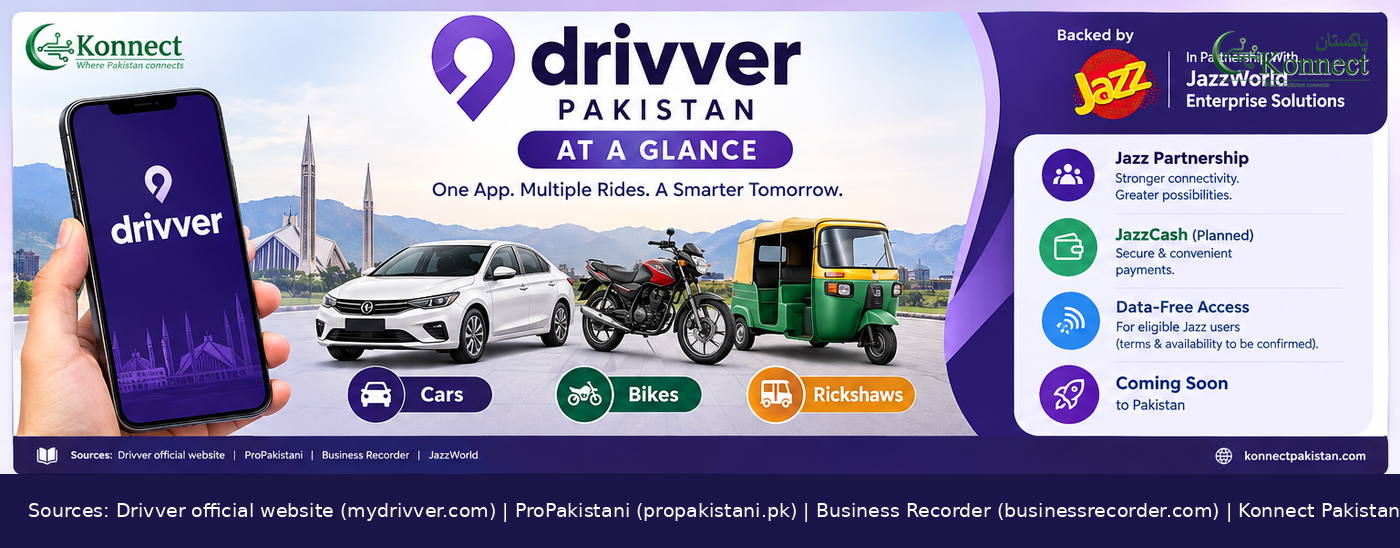
Drivver Pakistan is coming soon. See the latest launch date, cities, fares, cars, bikes, rickshaws, JazzCash, data-free access and driver requirements.
A new ride-hailing app is going to enter in Pakistan and it has already attracted so much attention just because of one unique feature: It is expected that jazz users will be able to access the Drivver app with consuming their mobile data, but this is subjected to the final terms and availability confirmed by jazz.
The platform Drivver is developed by Pakistani connected-mobility company iTecknologi in strategic partnership with JazzWorld Enterprise Solutions. The app is designed to offer cars, motorcycles and rickshaws through one platform and it will also connect mobility with digital payments and other financial services.
Drivver is currently listed as “coming soon” and the official launch date has yet not being confirmed. Its exact final city rollout schedule, fares, driver charges and insurance and some payment details are still pending.
What is Actually Drivver Pakistan?
Drivver is a Pakistan-built mobility platform that is designed to bring cars, motorcycles, rickshaw rides into one app. The platform is being led by iTechnologi which is a pakistani company working in connecting mobility, IoT and fleet technology.
Drivver’s official site says that iTechnologi serves more than 200,000 customers nationwide. Platform connectivity, digital infrastructure, distribution and its wider financial ecosystem is supported by Jazz including JazzCash. This partnership was formally announced in september 2026 through a strategic memorandum of understanding between JazzWorld enterprise solutions and iTechnology.
When Will Drivver Launch in Pakistan?
Drivver dose not have publicly confirmed a launch date yet. Its official site just says “Drivver is coming soon to Pakistan” and their help center also says that launch timing and city availability will be announced through official Drivver channels. So for now there is no official launch date and the most accurate answer is: Drivver is coming to Pakistan, but the official public launch date has not yet been announced.
Which Cities Will Drivver Cover?
Drivver says that it will launch its plan city be city rather than making the entire service available nationwide at once. Its current website refrences the following rollout information:
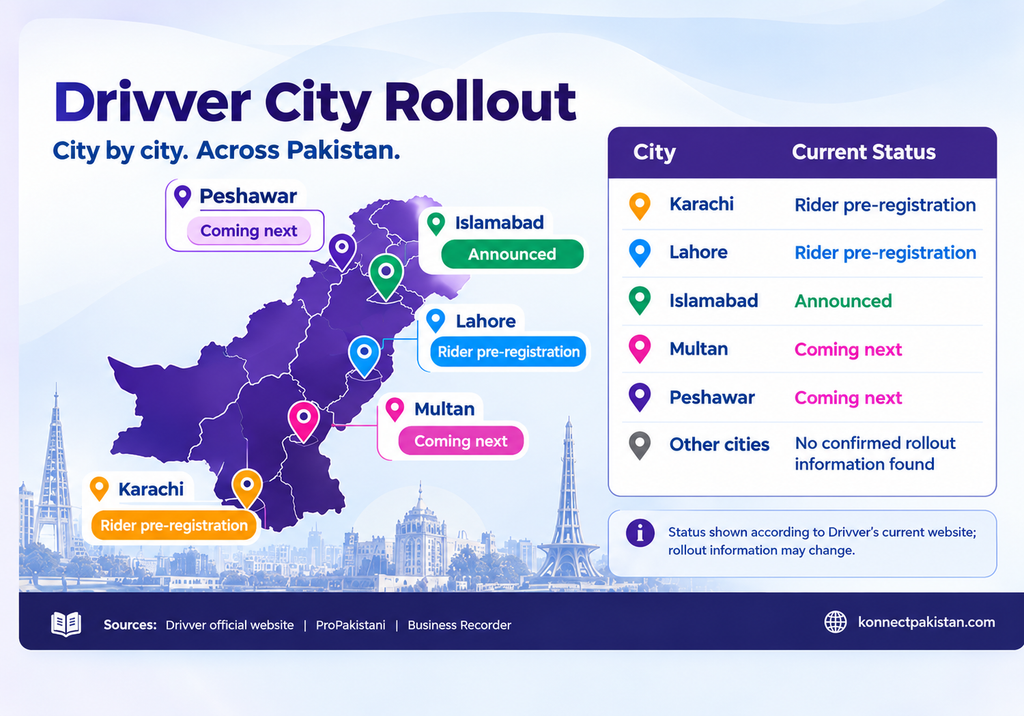
Drivver also notes that this city rollout display is illustrative until the relevant rollout information is approved and published through its systems. But the company also says that user can joinits launch list and select it city to receive updates. So, if you live in Lahore, Karachi, Islamabad, Multan or Peshawar, the availability information may be particularly relevant, but readers should check the latest official Drivver announcement before assuming rides are already operating in their city.
Will Drivver Really Work Without Mobile Data?
This is easily the most talked-about feature of the whole announcement.
When JazzWorld and iTecknologi first went public with the partnership, they said passengers and drivers on the Jazz network would be able to use the Drivver app without it eating into their mobile data. The idea was simple: let people book rides, accept requests, and manage trips without needing to buy a separate data package just for the app.
That’s a genuinely appealing pitch, and it lines up with what’s stated in the official partnership announcement, which describes the zero-rated access as a “key feature” of the platform for Jazz users.
But here’s the catch. Drivver’s own Help Centre has since added an important qualifier: any special data benefit will only be announced once Jazz confirms its availability, who’s eligible, and the exact terms.
So calling Drivver a fully “internet-free” ride-hailing app right now would be jumping the gun a bit. The more accurate way to put it is this:
Drivver has announced a planned data benefit for eligible Jazz users, but the final terms and rollout haven’t been locked in yet.
It’s a small distinction, but it matters — the original press release and the current FAQ are speaking with slightly different levels of confidence, and readers deserve to know that gap exists.
What Kinds of Rides Will Drivver Offer?
Drivver isn’t positioning itself as just another car-booking app. It’s being built around three categories of rides.
Cars — your standard sedans and hatchbacks for everyday city travel, with trip details visible before you confirm.
Rickshaws — aimed at short, practical hops around town, where a car is overkill and an auto-rickshaw just makes more sense.
Bikes — pitched as the quickest way for a solo rider to cut through traffic, especially for shorter trips.
Keep in mind, availability of each category will likely vary by city, and probably by which stage of the rollout that city is in.
How Is Drivver Supposed to Work?
Based on what’s currently live on Drivver’s website, the rider experience is meant to be pretty straightforward:
- Enter your destination — open the app and type in where you’re headed.
- Pick your ride — choose between a car, rickshaw, or bike depending on what’s available near you.
- Review and confirm — check the trip details and the price before you lock it in.
- Ride and rate — track the trip in-app, pay however you’ve set up, and leave a rating once you’re there.
The app is also expected to show you driver, vehicle, and route information upfront, along with trip-sharing and other safety features wherever they’re switched on.
So, How Much Will a Drivver Ride Actually Cost?
Nobody knows yet, at least not officially. Drivver hasn’t released a fare chart for Pakistan. Its Help Centre says the app will display the applicable price before you confirm a trip, and that full pricing will be announced closer to launch.
That means you should take any viral post claiming “Drivver charges Rs. X per km” or “a Karachi-to-Lahore trip on Drivver costs this much” with a big grain of salt — that information simply doesn’t exist publicly yet. Once fares are announced, expect them to shift based on the usual suspects: vehicle type, distance and route, which city you’re in, driver availability, time of day, and whatever pricing model the company settles on at launch.
Can You Pay With JazzCash on Drivver?
Yes — at least, that’s the plan. The original partnership announcement placed JazzCash front and center as part of Drivver’s payments ecosystem, and Drivver’s own site lists JazzCash integration as something that’s coming, while noting that the exact payment options available could differ by city and by how far along the launch is in that area.
Importantly, the current Drivver website also mentions cash and other digital payment options, so this isn’t shaping up to be a cashless-only platform. The honest summary here is: JazzCash is planned, but what you’ll actually be able to pay with may depend on where you are and when you sign up.
How Do You Become a Drivver Driver in Pakistan?
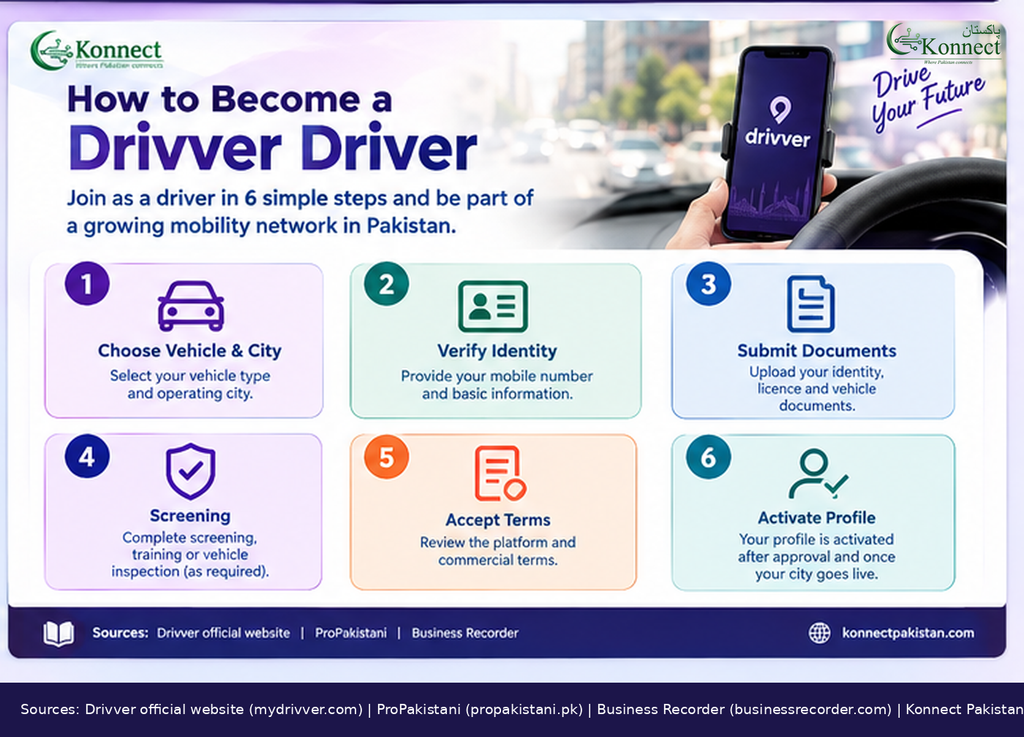
Drivver is also courting people who want to drive — full-time, part-time, doesn’t matter. The registration process currently runs through six broad stages:
Step 1: Pick your vehicle and city. Choose whether you’re registering a car, rickshaw, or motorcycle, and select where you’ll be operating.
Step 2: Verify your identity. Submit your mobile number and basic ID information.
Step 3: Upload your documents. This covers identity, driving, and vehicle paperwork.
Step 4: Go through screening. Depending on your city and vehicle category, this might include training or a vehicle inspection.
Step 5: Review the terms. Go through the commercial and platform terms before agreeing.
Step 6: Activate your profile. Once approved, your profile goes live as soon as your city is up and running.
What Do You Actually Need to Qualify as a Drivver Driver?
Requirements will shift a bit depending on local law, your vehicle type, and your city, but here’s the current minimum framework Drivver has published.
For everyone applying:
- Valid CNIC
- A verified mobile number
- A recent photo
- Proof you’re allowed to use the vehicle you’re registering
- Consent to screening
If you’re driving a car:
- A valid licence for that vehicle class
- Vehicle registration documents
- Tax or fitness certificates, where required
- A vehicle that meets the applicable age and condition rules
- An inspection, if your city requires one
If you’re driving a rickshaw:
- A valid licence
- Registration documents
- Any required route, fitness, or permit paperwork
- A vehicle that meets condition and identification requirements
If you’re riding a motorcycle:
- A valid motorcycle licence
- Motorcycle registration
- A compliant bike
- Approved helmets for both rider and passenger
- Any extra safety gear your city mandates
One thing worth flagging: Drivver itself describes these as a minimum framework, not a final checklist for every single city. If you’re planning to apply, it’s worth double-checking what’s required in your specific location before you go through the whole process.
Does Drivver Actually Pay Drivers Better?
This is one of Drivver’s bigger promises — a “driver-first” economic model that moves away from the typical heavy percentage-based commissions most ride-hailing apps charge.
The company says it’s designing the platform for more predictable earnings, but the actual commission rates and settlement terms haven’t been made public yet. So until Drivver puts numbers on paper, treat any claims about a specific commission percentage or guaranteed monthly income as unconfirmed.
What Drivver has said is that drivers will be able to see their completed trips, earnings history, adjustments, and settlements inside the app — and that a track record of completed trips and digital payments could eventually help eligible drivers build a financial footprint, subject to partner criteria and regulatory approval.
How Does Drivver Stack Up Against inDrive and Yango?
Drivver is walking into a Pakistani ride-hailing market that’s already fairly crowded.
inDrive has been expanding aggressively — as of a recent report, the company said Pakistan had become one of its fastest-growing markets globally, with local rides now running in more than 20 cities and an intercity network reaching over 200. Yango, meanwhile, has steadily rolled out across Lahore, Islamabad, Rawalpindi, Faisalabad, Karachi, and — as of its most recent expansion — Multan too, offering cars, bikes, and rickshaws across all of them.
Here’s a straightforward comparison of where things stand right now:
| Feature | Drivver | inDrive | Yango |
|---|---|---|---|
| Pakistan status | Coming soon | Operating | Operating |
| Cars | Planned | Yes | Yes |
| Bikes | Planned | Yes | Yes |
| Rickshaws | Planned | Yes | Yes |
| Jazz data benefit | Planned, pending confirmation | Not offered | Not offered |
| JazzCash | Planned integration | — | — |
| Fare visibility | Shown before confirmation; final pricing pending | Bid/negotiate model | Price shown before booking |
| Driver model | Driver-first model planned; charges pending | Standard driver-partner model | Standard driver-partner model |
| Current availability | Rolling out city by city | Multiple cities | Six listed cities |
This comparison will get a lot more meaningful once Drivver actually launches and starts publishing real fares, driver terms, and confirmed city coverage.
What’s Actually Going to Set Drivver Apart?
A few things, at least on paper:
- A planned Jazz-network data perk — the headline feature, though it’s still pending final confirmation from Jazz.
- Three ride types under one roof — cars, bikes, and rickshaws, all in a single app.
- JazzCash built in — connecting ride-hailing directly to Pakistan’s digital payments ecosystem.
- A driver-first commission model — aiming to lighten the load of traditional percentage-based cuts, though the exact numbers are still under wraps.
- A connected-mobility angle — thanks to iTecknologi’s background in IoT and fleet tech, Drivver is being pitched as more than a booking app.